


Friday, March 11, 2011
Alfa Romeo Sport Cars Autodelta Alfa Romeo 8C Competizione

Tuesday, March 1, 2011
Cadillac Aera Concept, 2010


The Cadillac Aera Concept is powered by compressed air via a highly efficient Pneumatic Drive System that has a 10,000-psi composite air storage tank with capacity for a 1,000-mile range. Flexible, pressurized air cells in the exterior skin, similar to material developed for the NASA Mars Rover airbags, enhance passive safety and interior comfort. The flexible polymer skin optimizes aerodynamics and functions as an ultra-lightweight alternative to conventional body panels and glass.
Cadillac Aera's body utilizes a 3D lattice, mono-formed frame that was designed to be similar to configurations found consistently in nature. The structure is formed from unique, alloy-utilizing, semi-solid freeform manufacturing, creating a naturally strong, extremely lightweight frame. All major body parts, including interior components, are essentially "grown" into a single part lattice structure.
The interior is crafted with an ultra-light recyclable polymer that allows for HVAC channels, fully adjustable seating, storage and comfort features all in one mono-form structure. Generous storage space accommodates luggage for two people.
The concept was conceived in GM's North Hollywood Advanced Design Studio by Frank Saucedo, director; Phil Tanioka, vehicle designer; Brent Wickham, concept strategist; Shawn Moghadam, layout designer and Timonen, the project manager. Earlier this week, GM commemorated 10 years of advanced design at the L.A. area studio.
The Design Challenge is part of the Design Los Angeles automobile designers' conference and has evolved into an integral element of the Los Angeles Auto Show. Design Los Angeles connects those working in the design industry with well-known automotive design industry leaders. Los Angeles is home to the world's largest concentration of manufacturer design studios, representing automakers from North America, Europe and Asia. It is also the home of Art Center College of Design, one of the world's foremost transportation design institutions where many of today's leading automotive designers began their careers.
Thursday, February 17, 2011
Acura MDX, 2010


Visually, the 7-passenger 2010 Acura MDX receives more aggressive styling in the form of new front and rear bodywork, a bold new front grille and numerous new trim enhancements. Under the hood, the Acura MDX receives a more refined 3.7L V-6 engine that teams with an all-new 6-speed automatic transmission for better performance and improved fuel efficiency. Inside, the Acura MDX receives a host of new features and technologies that make it even more luxurious.
Ride and handling have been enhanced as a result of a revised power steering system, stiffer rear trailing arm mounting, body rigidity improvements and reduced overall NVH. Thanks to Acura's exclusive Super Handling All-Wheel Drive™ (SH-AWD®) system, the Acura MDX's handling provides confident on- and off-road handling in addition to excellent foul weather performance.
To expand the dynamic capabilities for 2010 MDX, a new Advance package, with a revised Active Damper System and larger 19-inch wheels and tires, further enhances handling while retaining the comfortable, quiet and controlled ride quality expected of a luxury vehicle.
The 2010 Acura MDX exterior gets a fresh new look as a result of Acura's signature design front grille, a new front fascia, revised hood, new side sills, a new rear fascia matched with rolled edge polished stainless-steel exhaust finishers, revised taillights with brighter LED lights, many new trim pieces and available 19-inch diameter 7-spoke aluminum-alloy wheels.
Inside, the 2010 MDX benefits from the expanded use of Milano leather, a new thicker sport steering wheel with racing-inspired paddle shifters, new gauges, easier to understand button placement for center stack functions, available ventilated front seats and upgraded interior trim. In addition, a host of new technology is available including AcuraLink Real-Time Weather™ and Traffic Rerouting™. Other available features include a new full VGA 8-inch navigation screen, a new rear view camera with three unique view choices, upgraded rear entertainment system, an updated audio system with a dedicated 15 GB hard disk drive (HDD) and USB port connectivity, even more LED lighting - and the list goes on.
Powertrain
For 2010 the Acura MDX receives a new 3.7-liter VTEC® V-6. The engine continues Acura's longstanding mission to provide V-8 level horsepower and torque while retaining the size and fuel efficiency of a V-6. Based on the previous Acura MDX's powerplant, the newly refined 3.7L V-6 develops 300 horsepower and 270 lb-ft of torque to provide immediate throttle response, outstanding low- and mid-range torque and excellent high-rpm power.
Tuesday, February 8, 2011
Lamborghini Murcielago LP670-4 SuperVeloce, 2010


* Frame: High strength tubular steel structure with carbon fiber components
* Bodywork: In carbon fiber, except roof and door external panels (steel)
* Steering
o Type: Mechanical (rack and pinion) power-assisted
o Right-hand turning circle: 12.55 m (41.17 ft)
* Wheels and tires
o Front: 245/35 ZR 18"
o Rear: 335/30 ZR 18"
* Engine
o Type: 12 cylinders at 60°
o Bore and stroke: 88mm x 89 mm (3.46 in x 3.50 in)
o Displacement: 6496 cc. (396.41 in³)
o Compression ratio: (11 ± 0.2):1
o Maximum power: 670 hp (493 kW) at 8000 rpm
o Maximum torque: 660 Nm (487 lb-ft)at 6500 rpm
o Engine position in vehicle: Longitudinal central-rear
o Cylinder heads and engine block: Aluminum
o Intake system: Variable geometry with 3 operating modes
* Timing
o 4 valves per cylinder, 4 overhead camshafts
o Timing gear transmission: 2 chains
o Continuous timing variator (int. and ex.): Electronically controlled
* Ignition system
o Static type ignition system with individual coils (one for each spark plug).
o Firing sequence: 1-7-4-10-2-8-6-12-3-9-5-11
* Fuel system/injection
o Lamborghini LIE electronic engine control unit, multipoint, sequential timed, DRIVE BY WIRE
o Lubrication system
o Type: Dry sump
o Recovery pumps: 2 gear pumps
o Delivery pump (high pressure): 1 gear pump
* Cooling system
o Type: Liquid cooled, with pressurized circuit
* Transmission
o Type of transmission: Permanent all-wheel drive with Viscous Traction system
o Gearbox: 6-speed e-gear
o Clutch: Dry single disc
o Clutch disc diameter: 272 mm (10.7 in)
* Transmission ratios
o Traction Control System: T.C.S.
o Gearbox - E-Gear & Manual
o 1st: 1:3.091
o 2nd: 1:2.105
o 3rd: 1:1.565
o 4th: 1:1.241
o 5th: 1:1.065
o 6th: 1:0.939
o Reverse: 1:2.692
* Brakes
o 4 self-ventilated rotors with pedal control, hydraulic transmission with dual independent circuits, one for each axle with vacuum servo.
o ABS antilock device + DRP function
o Carbo ceramic brakes (CCB)
o Handbrake: Mechanical, acting on rear wheels
o Front rotor: Ø 380 x 38 mm (Ø 14.96 in x 1.5 in)
o Front caliper cylinders: n.6 (32-36-38 mm) (1.26 in -1.42 in-1.5 in)
o Rear rotor: Ø 380 x 38 mm (Ø 14.96 in x 1.5 in)
o Rear caliper cylinders: n.6 (32-36-38 mm) (1.26 in -1.42 in-1.5 in)
* Suspension
o 4-wheel independent articulated quadrilateral system. Hydraulic shock absorbers and coaxial coil springs. Suspension with dual front and rear struts, anti-roll, anti-dive and anti-squat bar.
* Dimensions
o Wheelbase: 2665 mm (104.92 in)
o Total length: 4705 mm (185.23 in)
o Total width: 2058 mm (81.02 in)
o Total height: 1135 mm (44.69 in)
o Dry weight: 1565 Kg (3450.2 lb)
o Front track width: 1635 mm (64.37 in)
o Rear track width: 1695 mm (66.73 in)
o Front overhang: 1090 mm (42.91 in)
o Rear overhang: 950 mm (37.40 in)
o Maximum overall width with external rear-view mirrors: 2240mm (88.19 in)
o Weight distribution front/rear: 42% - 58%
* Liquid capacities
o Fuel tank: 100 Liters (26.4 gal)
o Engine oil: 12 Liters (3.17 gal)
o Gearbox oil: 3,5 Liters (0.92 gal)
o Front differential oil: 1 Liter (0.26 gal)
o Rear differential oil: 2,5 Liters (0.66 gal)
o Cooling circuit: 15 Liters (3.96 gal)
* Performance
o Top speed with small spoiler: 342 km/h (212.5 mph)
o Top speed with big wing: 337 km/h (209,4 mph)
o Acceleration 0-100km/h: 3.2 s
* Fuel Consumption (according with DIR 1999/100/CE)
o City: 32 L/100km
o Highway: 13.7 L/100
o Combined: 20.6 L/100
o CO2 Emission: 480 g/km
* Fuel Consumption USA (according with US EPA guidelines)
o Manual
+ City cycle: 8 mpg
+ Highway cycle: 13 mpg
+ Combined: 10 mpg
o E-Gear
+ City cycle: 9 mpg
+ Highway cycle: 14 mpg
+ Combined: 11 mpg
Lamborghini Murcielago LP650-4 Roadster, 2010


The Roadster version of the Murciélago will offer an uprated 6.5 litre V12 engine that produces 650 hp (478 kW) along with permanent four-wheel drive: hence the model's LP 650-4 moniker.
With 660 Nm of torque, top performance is at 0-100km/h (0-62mph) in 3.4 seconds. The top speed is around 330 Km/h (205mph).
The special edition model will be produced in a limited volume (50 units only), with a Grigio Telesto exterior that combines grey bodywork with a special bright orange Arancio LP 650-4 featured on the front spoiler and sills. The LP 650-4 logo applied to the car's exterior is recognition of the car's increased power. The car features orange brake calipers and a transparent V12-engine cover, which shows off the V12 engine behind the driver.
The interior features echo the car's striking grey-and-orange exterior: besides the orange touches, there is an asymmetric dash design, with black Alcantara Nera on the driver's side, including door panel and central tunnel, and black leather Nero Perseus on the passenger's side.
The increased power of the Murciélago engine, from 640 to 650 hp, will be unique to the Lamborghini Murciélago LP650-4 Roadster: it demonstrates even further the developments that Lamborghini is able to offer from a current engine, and creates the exclusive characteristic of the Lamborghini Murciélago LP650-4 Roadster.
Lamborghini Gallardo LP550-2, 2010


Automobili Lamborghini now presents a model in his honour and bearing his name - the Lamborghini Gallardo LP550-2 Valentino Balboni.
The latest version of the Gallardo, Lamborghini's most successful model of all time - overall, more than 9,000 units of the model range have already been produced - boasts not only its own distinctive design and exclusive equipment, but its technology is unique too, as indicated by the model badge: the 550 stands for the power output in hp and the 2 is for rear wheel drive.
For several decades, Valentino Balboni has had a distinct influence on the character of the super sports car bearing the sign of the bull. With his fine-tuning and testing work, he has helped to shape many automotive legends, from the Lamborghini Miura of the 60s through to the current Lamborghini Gallardo and Lamborghini Murciélago models. Balboni was hired in 1967 by company founder Ferruccio Lamborghini himself. From early on, it was evident that the young Balboni had a special feel for cars, that most sensitive of all instincts that connects to the 'life blood' of an automobile and defines the soul of a test driver.
Limited to 250 units
The special exclusivity of the Lamborghini Gallardo LP550-2 Valentino Balboni is guaranteed - it is limited to 250 units.
The light-footed yet extremely safe
With this latest version of the Gallardo, Lamborghini is honouring its long-standing test driver in a very special way. The Lamborghini Gallardo LP550-2 Valentino Balboni was conceived in line with his own thinking, and it meets many customers' requests for a model with a unique character, which offers a very special kind of active driving fun. The Balboni model is the only current Lamborghini that delivers its power to the road via its rear wheels alone.
The rear wheel drive has a special appeal to those sports car drivers who enjoy a particular driving style. Thanks to the eminently powerful V10 driveline, controlled oversteer is no problem - naturally always to the extent defined by the driver - because refined road manners and perfectly tuned assistance systems mean that the Lamborghini Gallardo LP550-2 Valentino Balboni is an exceptionally safe sports car to drive.
Driving fun with unique character
In order to shape this unique character that combines driving fun and safety, the engineers at Sant'Agata Bolognese have incorporated extensive modifications into the LP550-2 Valentino Balboni. It was not simply a question of moving the transmission to the rear axle, the vehicle had to be adjusted and tuned in every element of its driving dynamics. This includes springs, dampers, stabilisers and even the tyres. The aerodynamics were also adjusted to take account of the change to the power flow.
The rear axle differential, with a 45 percent limited slip, was also redeveloped, as was the calibration of the e-gear transmission. One significant point was the adjustments made to the ESP system. While the standard program is focused on high stability, the CORSA program permits greater drift angles, thus enabling drivers to enjoy the dynamics of the LP550-2 to their full extent.
The outstanding performance is guaranteed
The adjustments have also been made to the very heart of the Lamborghini Gallardo, the 5.2 litre ten-cylinder: the perfect synthesis of hi-revving pleasure, pulling power, a constantly exuberant temperament and a powerful symphony played in all keys. In the Valentino Balboni, the compact and lightweight power unit generates 405 kW (550 hp). At a dry weight of only 1,380 kilograms, this guarantees outstanding performance: the LP550-2 is catapulted from 0 to 100 km/h (0-62mph) in a breathtaking 3.9 seconds, while the top speed of 320 km/h (199 mph) guarantees its place among the ultimate in super sports cars.
The powerful elegance in its distinctive design
The Valentino Balboni is not only unique in terms of its technology: its design and equipment reinforce its exclusivity. Its classic sporting character is emphasised by a colour strip in white and gold running from the front panel over the roof and parts of the engine cover all the way to the rear spoiler, with inspiration from the classic sports cars from the '70s. This colour treatment underscores the powerful elegance of the Lamborghini Gallardo and emphasises the unique Lamborghini design DNA. The Special Edition is available in eight colours, from Bianco Monocerus through to Verde Ithaca, or Arancio Borealis to Nero Noctis. The Scorpius wheels retain their dark grey finish, while the brake callipers come in black, orange or yellow, depending on the exterior paint finish.
The Classic sporting look for the interior.
The characteristic colour combination is repeated in the interior. The basic colour of the full leather upholstery is black. Both seats, however, feature the colour strip in white. The centre console is completely upholstered in Polar white leather to create a powerful accent. A badge below the left side window bears the signature of Valentino Balboni and the production number of the car.
The exclusivity of the Valentino Balboni is augmented further by its extensive equipment. Alongside several new leather features in the interior, there is also the transparent engine cover, the rear view camera, the navigation system with Bluetooth and the lifting system for the front axle that makes it easier to drive over obstacles. In addition to the extensive standard equipment, a list of further options is available including e-gear transmission and carbon ceramic brakes.
Sunday, February 6, 2011
2010 Bugatti Sports Cars Veyron from Mansory by Linea Vincero d’Oro
Wednesday, January 12, 2011
Satria FU 150 engine modifications

n early 2010, we start by opening a little secret korekan Suzuki Satria F 150 powerful, armed with the capabilities of the mas interview in the birth to my first drag racing car, certainly not something that is difficult to understand the performance of the engine berbasic two Noken as in a cylinder head or DOHC known by the term. Moreover, during this, we specialize in handling the 4 valve engine, like Yamaha Jupiter MX never stop learning, research, and innovation. This simple korekan be very effective.

Head racing satria F150
Focus remains on a modified sector motor 4 tap the brain power, namely the cylinder head design, noken axles, valve configurations, track income and fuel disposal, and the compression ratio. Dimensionless standard valve on the inlet 22 millimeters and 19 millimeters at the outlet, of course we immediately lengserkan, lha wong MX aja pake usually valvular Satria F even spec in 2010 to adopt a bigger valve, cook satria F pake The standard valve, LHA later if the middle of the road disalip he thought MX Magic
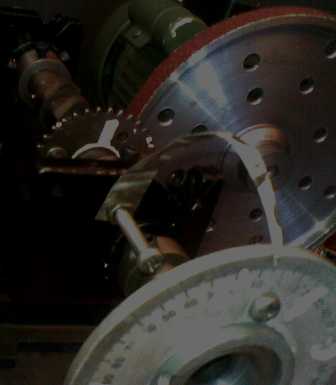
dialing cam satria F150
Actually what hell is not big enough standard valve FU? For standard motor design that was more than enough. With dimensions of 62mm diameter piston, the inlet valve is 22mm in diameter fu if the original conversion into a single valve is already at 31mm. Huh?! .. really big! Ga believe? let's count, the extent of each area of valvular Fu worth 380 mm square, obtained from the multiplication konstatanta Phi with valvular quadrant radius. Results were multiplied by the number of valve that as many as 2 seed, got 760 mm square. Now this area we will use to find the diameter of valve if Fu was cursing a single valve only, then 760 divided by the constant 3.1416, the results are then in the square root to find the radius of valvular shadow. Found the end result = 15.55 mm is the radius katubnya. Well if you mean yes 31mm diameter anyway. Compare with the tiger who has a 63.5mm piston with a valve inlet 31.5, fu has a bore to valve ratio is greater than the tiger. But that's for standard size
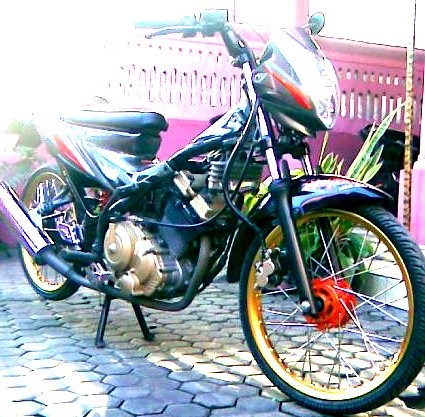
Suzuki satria F 150
If modification ya just bury 24/21mm valve cylinder head Satria F, to compensate for loaded piston cylinder SCORPIO. It was quite fitting size as congenital Scorpio inlet valve 34mm in diameter. Greater torque, seconded from the piston cylinder membeludak kapastitas 8mm. Breath machines seconded from the larger orifice dimensions, may be formed as a result re-ported to a wider geometry.

Bore UP Suzuki Satria
Plus force Noken as high as nearly 8milimeter. To design satria F150 Noken as this, we are also researching tools Noken as a new lathe, in addition to open-book open again Noken as, ngerpek hehehehe ... a new tool with locking feature duration, maximize the precision performance of the cam, so that between 1 lobe cam with a lobe others can see you point the same phasing as well as similar cam profile. With the lock duration is so much easier we make again, just set a benchmark that dimau, turn on the machine again,

Learning never ending ...
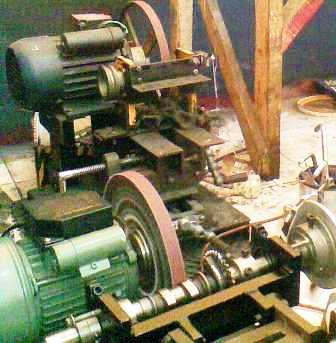
Latest cam lathes, more stable, more precise
Venturi carburetor for supplying breathing engine power to minimum 28 millimeters with skepticism aperture system directly wired to react to the gas, unlike the slow motorcycle carburetor congenital ga ... heheheheh very sporty.
Then how to anticipate the shape ported F150 knight who tend oval? Do not bother, lha wong ported Bajaj pulsars aja box shape we can solve the solution, let alone this one ... yeekkkk guaya ... dah kalok immediately put on slippers ditimpuk
In the days of yore, when studied in the hermitage silat, the temperature of teaching science racing oval geometry conversion into a round shape. namely the length + height, multiplied by 50%. At that time I believe uh ga motorcycle carburetor jupiter nyopot told me, told ngukurin, then send unloading n bersihin carburetor and gentlemen, and then measuring the diameter of the tube skepticism jupiter, er is the same as the formula ... kok nemu win at wong Iki formula ngene patches, definitely not your taxable deh dikerjain told bersih2 carburetor gara2 ga believe wkwkwkkw: D Yes, while these formulas use it first until later I found a more precise formula use tangent cos sin, kalok increasingly more complicated it seems so cool ... hehehehe
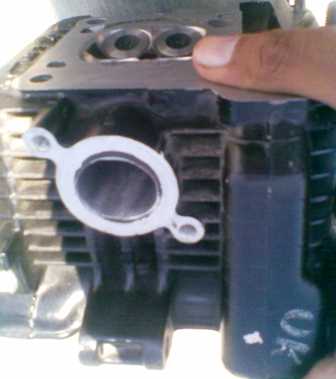
Porting head satria F150
Similarly, in ported exhaust suzuki satria 120 R, if the exhaust port height, duration is too large, low dynamic compression ratio automatic motor sluggish, except in the cylinder head squish compacted and have a high octane fuel just like, yes but if you make it fit ga Daily ...
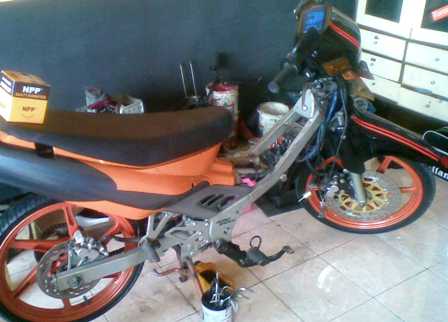
Satria 120 R
Eh kok so yes ehehhehe bahasin 2 stroke ... but also really exciting modif suzuki satria 2 stroke, so remember the high school with 3v3 exhaust design, plus embedded piston of motor sport ... RGR 150cc SP 28mm carburetor, biuuuhhhhhh ... horror! But it comes to exhaust suzuki 2 stroke, from the first, if builders want to come clean exhaust Ente, would say hard to find a suit that fits, especially if basic korekan despite relying on a standard exhaust pipe silincer already dibenami 20 millimeters. But with the existing calculation, at least we can create an ideal design for the character of a particular machine. Stay patience mechanic who determines the final outcome settings.
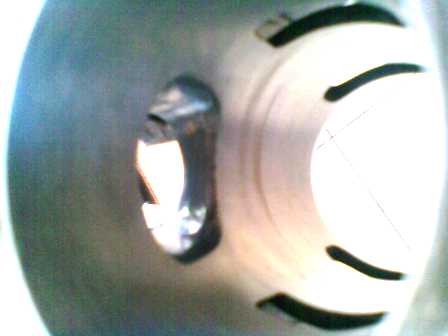
Tuning Blok Suzuki Satria
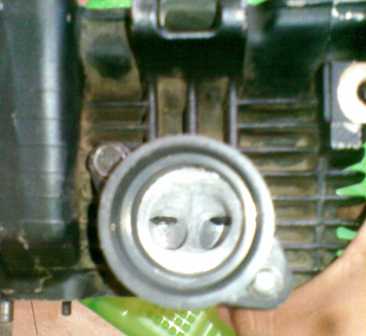 If this was ported to the carburetor big: D
Continue to our black steel warrior, complete machine design, we are looking for complementary accessories power, we entrust the brain ignition Rextor to align the curve with a laptop. Then we spend the exhaust gas from CMS products, pipe dimension of notch and engaging, although 20 red bills have to be sacrificed motorcycle owners to propose this special exhaust. Perfecto DE ITALIANO:) Cool fashionable slang and can be made racing ... yes Satria F150.
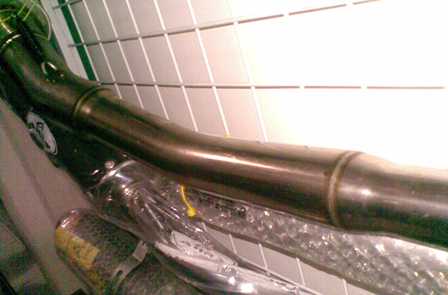
Neck CMS exhaust pipe

